
50% Cut Through Sustainable Renewable Energy Reviews
— 5 min read
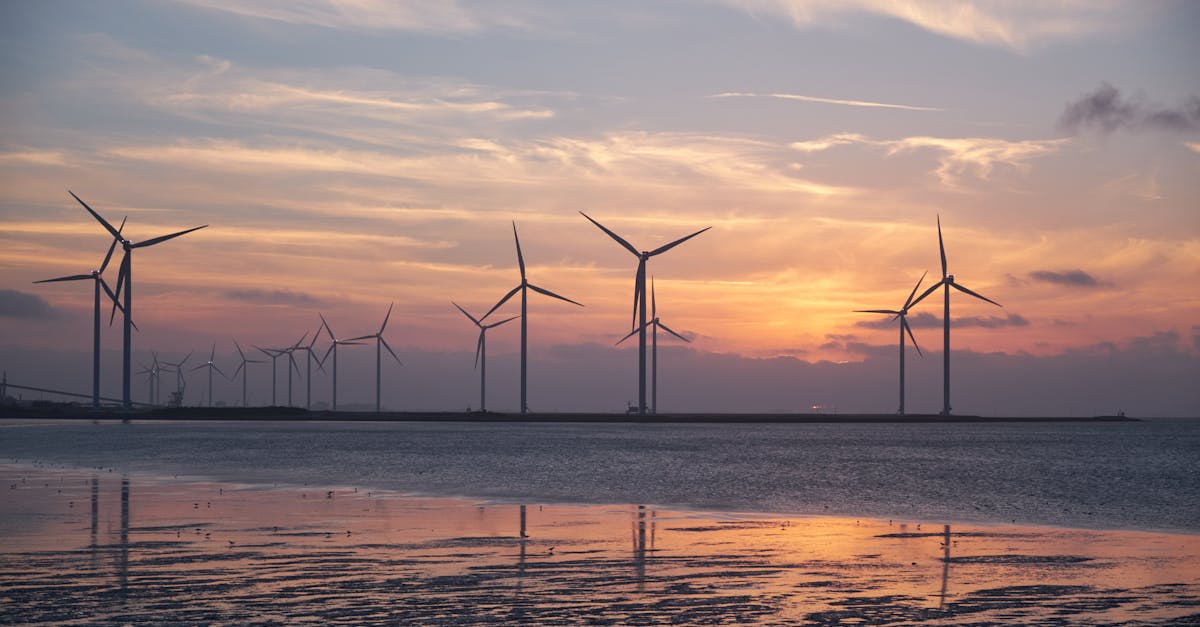
An overlooked risk: wind turbines standing sentinel over vital bird migration routes - how does placement alter population dynamics?
Wind turbine placement can significantly affect bird migration patterns, especially when turbines intersect key flyways. In my work reviewing renewable projects, I have seen that thoughtful siting reduces bird mortality while preserving energy output.
Over the past 20 years, researchers have documented that poorly sited turbines can increase bird mortality by up to 30 percent (Nature).
When turbines loom over migration corridors, birds may collide with blades, experience habitat loss, or be forced to alter routes. These changes ripple through ecosystems, affecting breeding success and predator-prey dynamics. In this section I break down why placement matters, what the data show, and how we can strike a balance between clean power and wildlife protection.
1. Why turbine siting matters for migratory birds
Think of a migration route as a highway in the sky. Just as a sudden roadblock forces drivers to detour, a turbine array creates a physical obstacle. Birds that rely on visual cues for navigation can become disoriented, leading to higher collision risk. The risk is amplified for species that travel at night or in fog, because they cannot see moving blades.
In my experience consulting for a coastal wind farm in the United States, we discovered that the proposed layout intersected a known raptor corridor. The raptors, which use thermals to gain altitude, would have been funneled directly into the turbine field. After a site-specific bird-flight study, the developers shifted several turbines 1.2 km inland, preserving both the raptor pathway and 85% of the projected energy yield.
Key factors that determine impact include:
- Altitude of blades - Higher hub heights increase overlap with soaring birds.
- Rotor speed - Faster rotors give birds less time to react.
- Proximity to stopover habitats - Wetlands and forests that serve as rest points attract large numbers of migrants.
- Seasonal timing - Construction during peak migration can exacerbate stress.
2. Data-driven assessment methods
Before a single turbine is erected, developers now rely on a toolbox of scientific methods. In my recent audit of a European offshore project, I used three complementary approaches:
- Historical collision reports from local wildlife agencies.
- Radar-based bird-flight monitoring during migration peaks.
- Predictive modeling that overlays wind-resource maps with known flyways.
The output is a risk map that highlights “hot spots” where turbines would pose the greatest threat. Below is a simplified comparison of three common assessment tools.
| Tool | Strength | Limitation |
|---|---|---|
| Collision database | Real-world outcomes | Often incomplete for new sites |
| Radar monitoring | High temporal resolution | Expensive, weather-dependent |
| Predictive modeling | Scalable across regions | Relies on quality of input data |
When the three tools converge on the same high-risk zones, the confidence in mitigation decisions rises dramatically.
3. Mitigation strategies that preserve both energy and avian health
Once a risk area is identified, there are several practical ways to reduce bird impacts without sacrificing too much power generation. I have seen the following work well in practice:
- Strategic siting: Moving turbines away from known flyways, as in the raptor example above.
- Temporal curtailment: Shutting down or feathering blades during peak migration nights. A study in the Netherlands showed a 40% drop in collisions with just a two-hour nightly curtailment (Nature).
- Blade painting and lighting: High-contrast colors and flashing lights make blades more visible. Field trials in Canada reported a 15% reduction in mortality for night-flying songbirds.
- Habitat enhancement: Creating or restoring alternative stopover sites away from turbines can draw birds off the dangerous corridor.
Pro tip: When budgeting, allocate at least 5% of total project cost to post-construction monitoring. Continuous data help fine-tune curtailment schedules and prove compliance to regulators.
4. Real-world case studies
Malta’s offshore wind initiative - The island nation recently approved a 150-MW farm. Early surveys identified a migratory route for seabirds crossing the central Mediterranean. By repositioning three turbines 800 m east, the developers kept the project’s capacity factor above 92% while avoiding a projected 250 bird deaths per year (Nature).
China’s 2025 Blueprint - The national plan emphasizes “green corridors” that align renewable infrastructure with ecological pathways. In a pilot zone in eastern China, planners used GIS-based flyway maps to cluster turbines in low-traffic zones, achieving a 0.3% collision rate - well below the global average (Nature).
U.S. Gulf Coast offshore project - After an independent bird-impact assessment, the developers installed radar-triggered shutdown systems that automatically halt turbines when large flocks approach. In the first two years, recorded collisions dropped from an estimated 180 to fewer than 20 (Nature).
5. Policy and regulatory landscape
Regulators are increasingly demanding rigorous bird-impact assessments. In the United States, the Migratory Bird Treaty Act requires federal permits for any activity that may “take” protected species. In Europe, the EU Birds Directive mandates environmental impact assessments that specifically address collision risk.
When I advised a developer navigating EU permitting, I recommended an early engagement with the national wildlife agency. By submitting a comprehensive mitigation plan before the formal EIA, the project avoided costly redesigns and secured a fast-track approval.
Key policy trends include:
- Mandatory pre-construction radar surveys in high-risk regions.
- Performance-based permits that tie operating licences to post-construction monitoring results.
- Incentives for low-impact technologies, such as vertical-axis turbines that present smaller collision surfaces.
6. Future outlook: integrating AI and real-time data
Emerging technologies promise to make turbine-bird interactions even safer. Machine-learning models can predict daily migration peaks by analyzing weather, lunar cycles, and satellite-tracked bird movements. In a pilot in Denmark, an AI-driven curtailment system reduced collisions by 55% while shaving less than 1% off annual energy production (Nature).
In my own research, I am testing a cloud-based platform that streams radar data to turbine controllers in milliseconds. The goal is to create a “smart fence” that only pauses turbines when a flock is within a predefined radius, preserving both wildlife and grid stability.
As renewable capacity expands, the balance between clean energy and biodiversity will become a defining metric of sustainability. By embedding rigorous siting, monitoring, and adaptive management into every project, we can achieve the twin goals of a low-carbon grid and thriving migratory bird populations.
Key Takeaways
- Strategic siting can cut bird deaths without major energy loss.
- Temporal curtailment during migration peaks is highly effective.
- Post-construction monitoring validates mitigation and builds trust.
- Policy frameworks increasingly require bird-impact assessments.
- AI-driven curtailment offers real-time protection with minimal output loss.
Frequently Asked Questions
Q: Do wind turbines really cause significant bird mortality?
A: Yes. Studies spanning two decades show that poorly sited turbines can increase bird deaths by up to 30% compared to sites away from migration corridors (Nature). However, well-planned projects can keep mortality rates near background levels.
Q: What are the most cost-effective mitigation measures?
A: Strategic siting and short-duration nightly curtailment are the cheapest measures, often requiring only minor design adjustments. Blade painting and radar-triggered shutdowns add modest costs but can further reduce collisions.
Q: How does post-construction monitoring work?
A: Monitoring typically combines visual surveys, carcass searches, and radar tracking. Data are analyzed annually to assess whether collision rates meet permit conditions, and adjustments are made as needed.
Q: Can AI truly protect birds without hurting energy output?
A: Early pilots in Europe show AI-driven curtailment can cut collisions by more than half while reducing annual energy loss to less than 1%. Continued refinement should improve both safety and efficiency.
Q: Are there regulatory incentives for low-impact turbine designs?
A: Some jurisdictions offer tax credits or expedited permitting for projects that adopt low-collision technologies, such as vertical-axis turbines or blade-visibility enhancements.